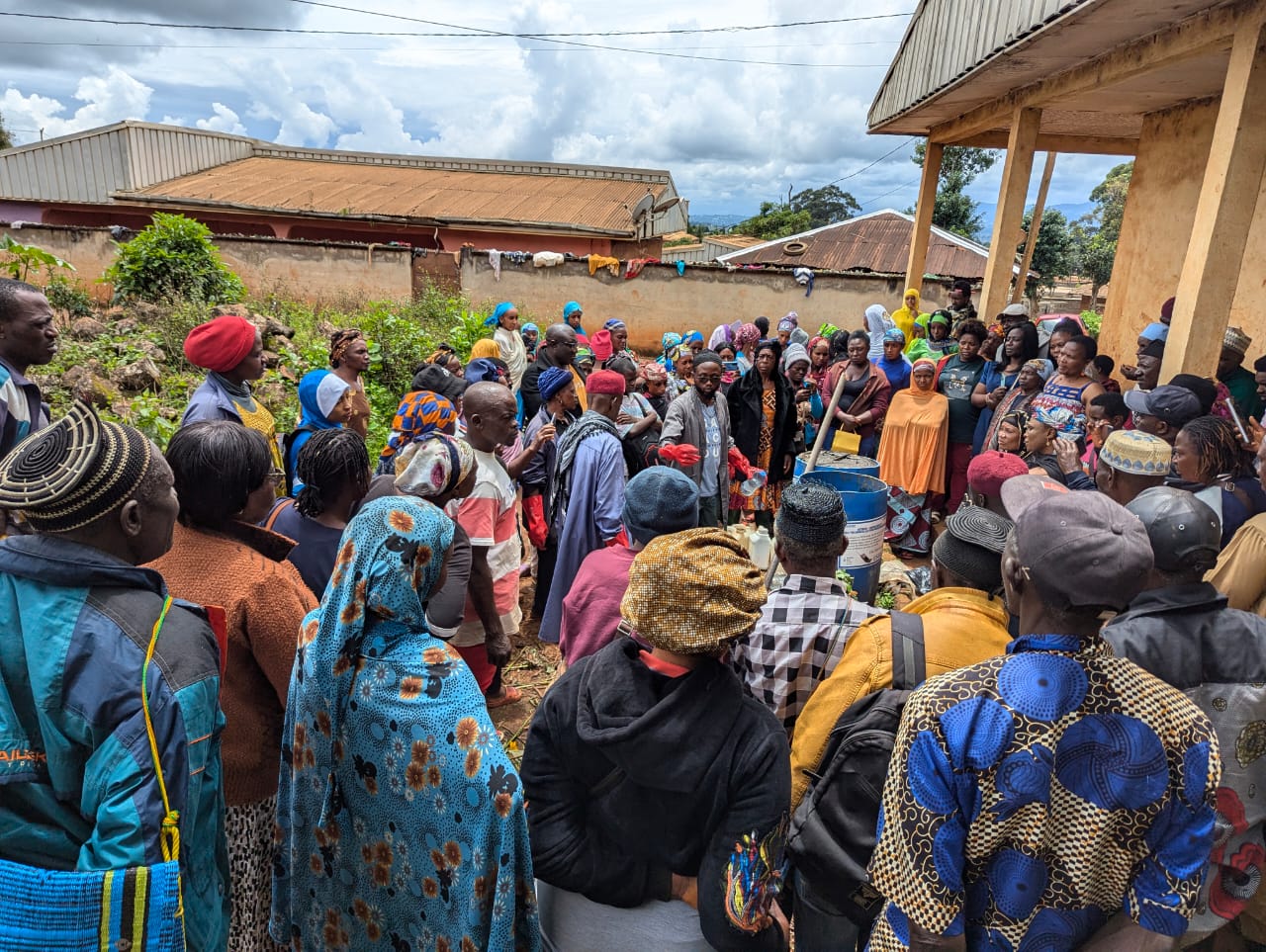
Community Training On Organic Liquid Manure Prodution
LELIV Training on Organic Liquid Manure Production in Santa Subdivision
15 October – 05 November 2024
From 15 October to 05 November 2024, LELIV CIG successfully implemented a hands-on training program on organic liquid manure production in Santa Subdivision. The initiative specifically targeted young farmers and gardeners, widows, twin mothers, and other vulnerable community members, with the aim of strengthening sustainable livelihoods through organic agriculture.
The training was designed to respond to the growing challenges faced by smallholder farmers, including high input costs, declining soil fertility, and limited access to chemical fertilizers. LELIV CIG introduced participants to low-cost, locally adaptable, and environmentally friendly techniques for producing organic liquid manure using readily available materials. Emphasis was placed on practical learning, allowing participants to actively engage in every stage of the production process.
Throughout the training period, participants were guided on the importance of organic farming, soil health, and the role of natural inputs in improving crop productivity. Sessions covered raw material selection, preparation, fermentation, application methods, and safety practices. Special attention was given to ensuring that the knowledge shared could be easily replicated at household and community levels without financial strain.
The inclusive nature of the program ensured that women and vulnerable groups were placed at the center of the learning process. By empowering widows, twin mothers, and young people with practical skills, the training contributed to increased self-reliance, food security, and income-generation opportunities. Participants were encouraged to use the organic liquid manure in home gardens, vegetable plots, and cereal farms, thereby improving both nutrition and farm productivity.
Beyond technical skills, the training also served as a platform for community engagement and peer learning, fostering collaboration and knowledge exchange among participants. It reinforced LELIV CIG’s commitment to people-centered development, where agriculture is used as a tool for social inclusion, dignity, and resilience.
Overall, the Santa Subdivision training stands as a strong example of LELIV CIG’s dedication to promoting organic agriculture, supporting vulnerable populations, and building sustainable farming communities. The impact of the program continues beyond the training period, as beneficiaries apply and share the knowledge gained to improve livelihoods and protect the environment.